NATIONAL AWARD FOR DESIGN
Recipient:AECOM
Project: Southport Broadwater Parklands, Gold Coast, Queensland
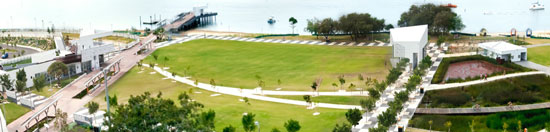
The Awards Jury felt the Southport Broadwater Parklands project represents a ‘new look’ Gold Coast.
Funded through the Q150 Legacy Infrastructure Program, the masterplanning and first stage of construction has delivered a project of big sweep that has the potential to become one of Australia’s great foreshore parks. AECOM’s design generates a robust and sustainable framework within which activities will happen and has created active connections to a re-activated green waterfront.
The attention to ecosystem preservation and sustainable design ticked all the boxes on the AILA Climate Change case studies as assessed against AILA principles, and stands as an exemplar for future practice in the development of public space in this area of the country, that continues to withstand the pressures of population growth and increasing visitor numbers.
NATIONAL AWARD FOR DESIGN
Recipient:Convic Design Pty Ltd
Project: Geelong Youth Activities Area, Geelong, Victoria

This new section of edgy, energized waterfront located on the main water’s edge in the heart of Geelong’s CBD presents a bold and inclusive, anything-but-passive public open space.
Designed to attract Geelong’s young people to the waterfront and also ‘forge intergenerational social networks’, the jury was convinced this is a unique urban public space that succeeds in connecting and giving back to the community. At first glance, it looks like an area for skateboarding, but with its series of terraced levels, it is in fact a cascade of variably sized spaces inherently adaptable for multiple future uses.
The jury applauds the focus on social sustainability and the City of Geelong’s commitment to attracting active young people into this prominent shared public space.
NATIONAL AWARD FOR DESIGN
Recipient: Gamble McKinnon Green
Project: Pioneer Park, Townsville Riverway, Townsville, Queensland
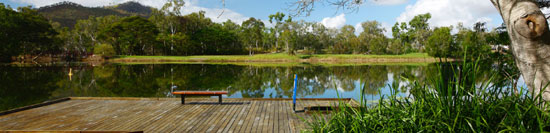
The jury was pleased with the manner in which this project presented a “distinctively Townsville” approach, and represented a positive direction for Townsville in redeveloping this precinct, eschewing the temptation to redeveloping this unique top-end city in a generic urban style.
Beautiful integration of existing mature trees and selection of endemic plants, gives the project good environmental credentials, as well as good social benefits, further enriched with the integration of a local arts program. The park’s development responds to recreation needs of this city and importantly, provides public access to water for swimming, at no charge.
NATIONAL AWARD FOR DESIGN
Recipient:McGregor Coxall
Project: Ballast Point Park, Sydney
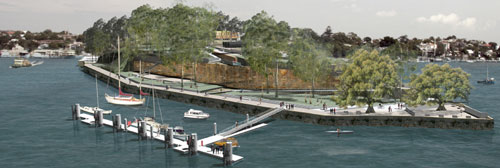
Ballast Point Park is one of the latest examples of the contemporary reclaiming of harbour open space in Sydney, located on the Birchgrove Peninsula.
A 2.8ha former industrial lubricant production site with a rich heritage linking it to pre-colonial use by Aboriginal people, the site takes its name from the quarry operations of the late 1800s that supplied ship ballast. Working with fundamental principles of remediation and sustainable design, the resulting design resisted taking a “clean slate” approach to industrial land remediation, allowing the expression of its many layers of history to be revealed while creating a contemporary and robust park of regional significance that is locally used.
The jury applauded the creative approach to reusing materials on site and admired the level of skill and coordination of players involved—from dealing with a lack of geotechnical information to revising design directions when new opportunities revealed themselves on site, eg the discovery of the foundations of a harbourfront villa. McGregor Coxall’s design elaborates the masterplan developed by Anton James Design in cooperation with Context and CAB Consulting.
NATIONAL AWARD FOR DESIGN
Recipient:Taylor Cullity Lethlean
Project: Lartelare, Ethelton, Adelaide
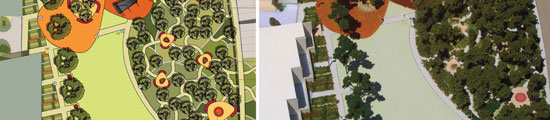
This project presents an exemplary consultation process with the local Aboriginal community and in particular with the Brodie family who are specifically connected to this site.
This underpins the creation of a culturally meaningful design, in the largest public open space within a new urban residential development in Ethelton, South Australia.
The jury sincerely compliments all involved—the landscape architects, local councils and developers—for their commitment to this dimension of the project. Interpretation of the site’s heritage and local significance, selection of endemic plantings, design and crafting of specific site elements, and the skillful sculpting of landform, planting masses and circulation have generated a space of noteworthy sensitivity and gentleness that sits in welcome contrast to the more contemporary, urban qualities of the built form. The inclusion of a green industry training scheme in this initiative delivers significant social benefits that complement the attention to sustainable design and construction practices.